By Rylan Patel
There’s something hypnotic about a roulette wheel. The ball clatters around the rim, slows, drops, and for a second the whole table holds its breath. It looks like pure chance, and in the short run it is. But over many spins, the numbers behave in a very predictable way, and that’s where the casino’s advantage hides. Understanding roulette odds won’t make you a winner, but it will help you pick the better version of the game, avoid the worst bets and decide how much you’re really paying for the entertainment. This guide breaks it all down in plain English.
How Roulette Works in 60 Seconds
The Wheel and the Table
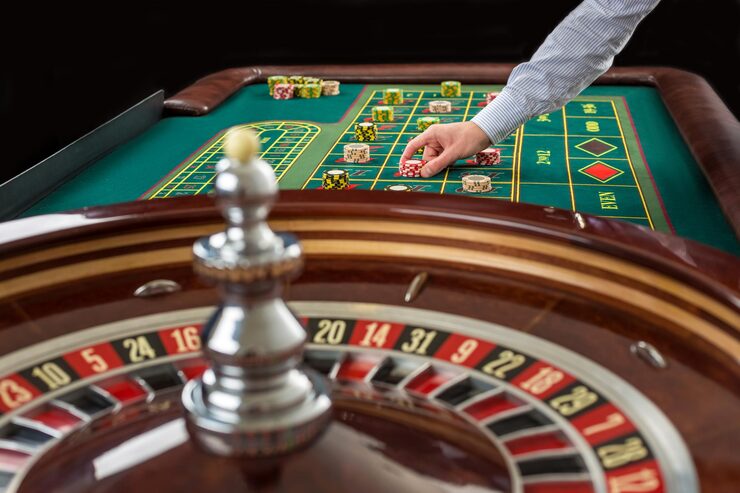
Roulette is played with a spinning wheel divided into numbered pockets and a table layout where you place chips. Numbers 1 to 36 are red or black, and there’s at least one green zero. The dealer spins the ball one way and the wheel the other. Whatever pocket the ball lands in decides every bet on the table.
Inside and Outside Bets
Inside bets are placed on specific numbers or small groups of them. Outside bets cover bigger chunks of the layout, like red or black, odd or even, or a dozen numbers at once. Smaller targets pay more, and bigger ones pay less.
Typical Payouts
A straight up bet on one number pays 35 to 1. A split across two numbers pays 17 to 1, a street of three numbers pays 11 to 1, and a corner of four pays 8 to 1. Even money bets such as red or black pay 1 to 1, while dozens and columns pay 2 to 1. The payouts are identical on both major versions of the game, which is exactly why the wheel matters so much.
Understanding Roulette Odds
True Odds vs What the Casino Pays
The trick behind the casino’s edge is simple. The payout doesn’t match the real chance of winning. On a European wheel with 37 pockets, your chance of hitting a single number is 1 in 37, which means a fair payout would be 36 to 1. The casino pays 35 to 1. That one unit difference is the house edge in action.
Odds on Common Bets
On a European wheel, an even money bet like red or black wins about 48.65% of the time. On an American wheel, the same bet wins about 47.37% of the time, because there are more losing pockets. A single number comes in at about 2.70% on a European wheel and about 2.63% on an American wheel. The payouts don’t change, but your chances do.
European vs American Roulette
One Zero or Two
The main difference is the number of green pockets. European roulette has 37 pockets, with numbers 1 to 36 and a single zero. American roulette has 38 pockets, adding a double zero. It’s easy to spot at a glance, since two green pockets means an American wheel.
The House Edge in Each Version
The house edge is the average share of each bet the casino keeps over the long run. On a single zero European wheel, it’s about 2.70%. On a double zero American wheel, it’s about 5.26%, nearly double. Return to player works out to roughly 97.30% for European and 94.74% for American, so the same payouts leave you with noticeably less value on the American wheel.
What That Looks Like Over Time
Imagine betting $100 per spin for 1,000 spins. On average, you’d expect to lose around $2,700 on a European wheel and about $5,260 on an American wheel. Real results will swing up and down, and anyone can walk away ahead on a given night. But the long run average is why choosing the single zero table is the simplest improvement you can make.
French Roulette, La Partage and En Prison
Some tables go a step further. With La Partage, if the ball lands on zero and you’ve placed an even money bet, you lose only half your stake. With En Prison, your even money bet is held for the next spin, and if it wins, you get your original stake back. Both rules cut the house edge on those even money bets to about 1.35%. They apply only to even money bets, though, and not every table offers them, so check the rules before you play.
The Worst Bet on the Wheel
On American wheels, there’s a special five number bet covering 0, 00, 1, 2 and 3. It carries a house edge of about 7.89%, the highest on the table. Triple zero wheels, which appear in some places, push the edge to around 7.69% on every bet. If you can choose, avoid both.
Do Betting Systems Work?
People love roulette systems, from doubling after a loss to following patterns on the scoreboard. None of them change the odds. The wheel has no memory, so a run of reds doesn’t make black due. Systems can change how quickly you win or lose small amounts, but they can’t touch the house edge. A system that feels clever is simply a more elaborate way to risk the same money.
Roulette Among Other Casino Games
Roulette is one of the most recognizable casino games because it’s easy to learn and fast to play. There’s no skill element that changes the odds, unlike blackjack or poker, where decisions matter. That makes it a good game to understand mathematically, because what you see in the table above is essentially all there is. Your only real choices are which wheel to play, which bets to place, how much to stake and when to stop.
Playing Roulette Responsibly
Treat roulette as paid entertainment, not income. Decide your budget before you start, and only use money you can afford to lose. Set a time limit too, since the pace of online play makes it easy to lose track. Take breaks, never chase losses, and skip sessions when you’re stressed or upset. Real money online casino games are legal only in some US states, and age and licensing rules vary, so confirm that a site is licensed where you live before you play. If a site offers deposit limits or self exclusion tools, use them early.
When It’s Time to Get Help
If gambling stops being fun or starts affecting your money, sleep, work or relationships, take that seriously. Free, confidential support is available in the US through the National Problem Gambling Helpline at 1-800-MY-RESET, and the older number 1-800-522-4700 also still works. You can call, text or chat at any hour, and loved ones can reach out too.
Final Thoughts
Roulette is simple, but the math behind it is worth knowing. A single extra zero doubles the house edge, special rules like La Partage can soften it, and no betting system can erase it. Choose the better wheel, keep your stakes small and treat the result as the price of an evening’s entertainment. That way, the wheel stays what it should be: a bit of suspense, with clear limits you set yourself.
Frequently Asked Questions
How do roulette odds work?
Your chance of winning depends on how many pockets are on the wheel, while the payout stays fixed. A single number pays 35 to 1, but the real odds are 1 in 37 on a European wheel and 1 in 38 on an American wheel, which creates the house edge.
What is the difference between European and American roulette?
European roulette has one zero and 37 pockets, while American roulette has a zero and a double zero and 38 pockets. That extra pocket raises the house edge from about 2.70% to about 5.26%.
What does house edge mean in roulette?
It is the average percentage of each bet the casino keeps over the long run. A 2.70% edge means about $2.70 lost per $100 wagered on average, though individual sessions can vary widely.
What are La Partage and En Prison?
These are rules on some single zero tables that soften losses on even money bets when the ball lands on zero. They cut the house edge on those bets to about 1.35%, but not every table offers them.
Can a betting system beat roulette?
No. The wheel has no memory, so past results do not change future spins, and no system can reduce the house edge. Systems only change how you spread your wagers, not the long run odds.